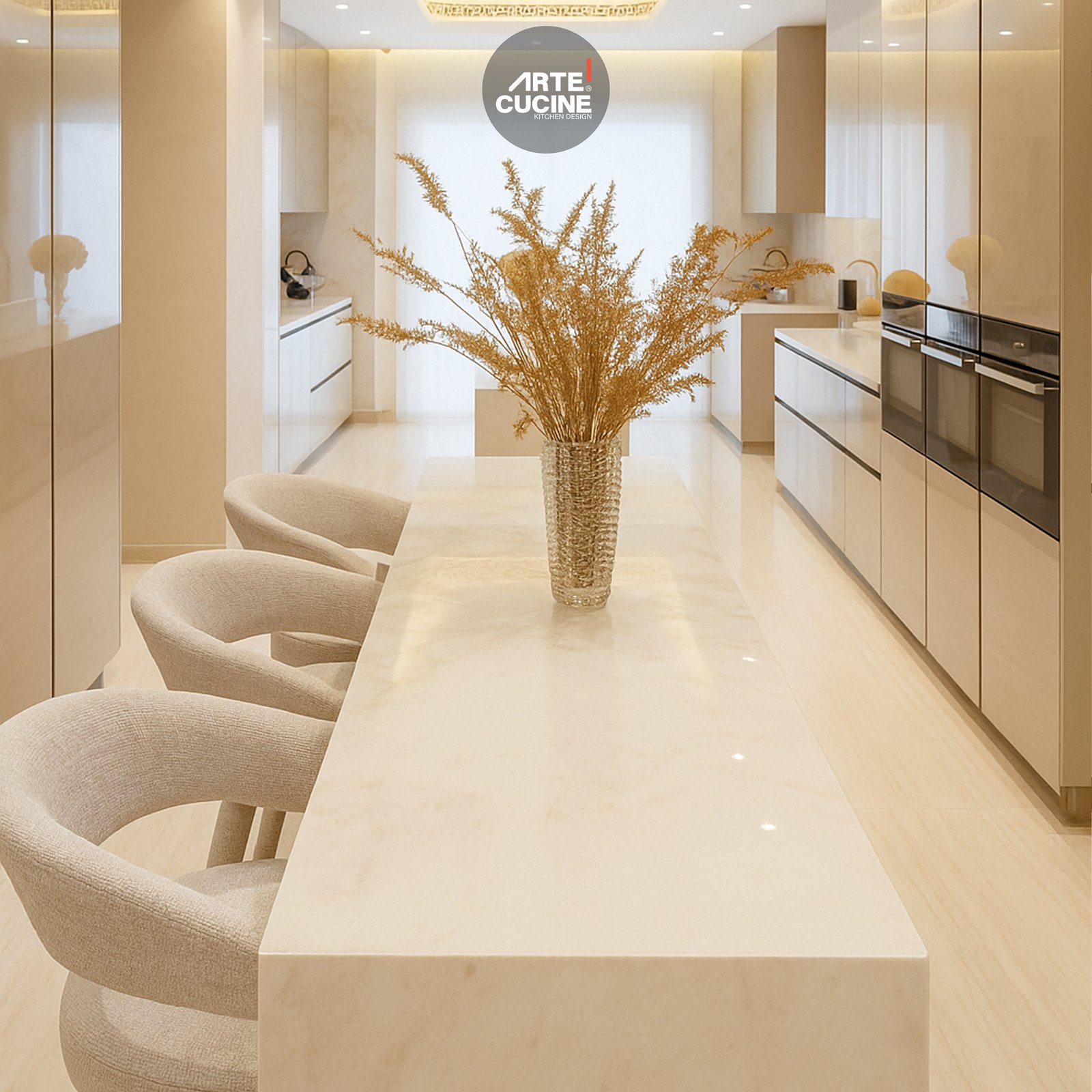
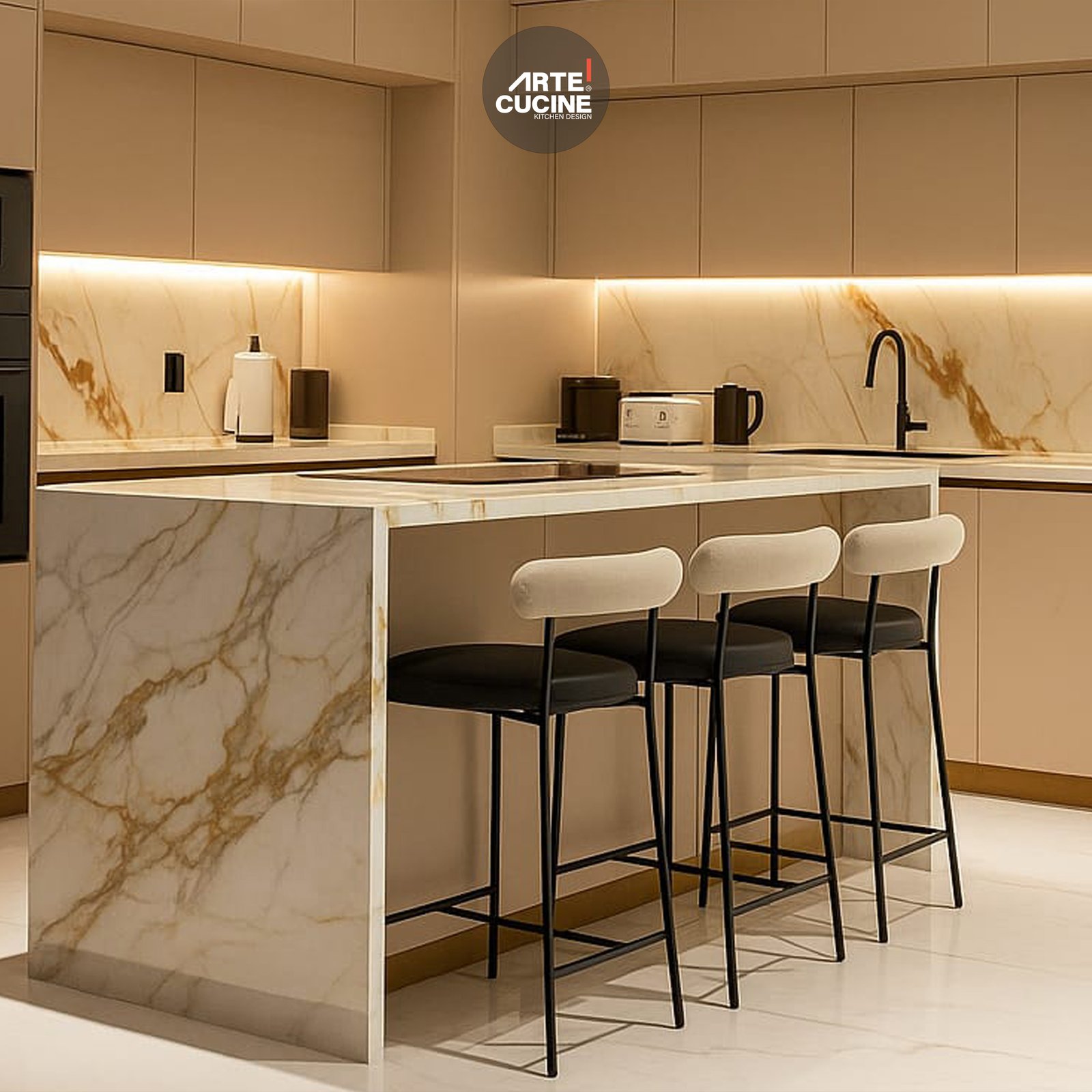
A wooden kitchen is one of the most important elements in a home, combining elegance, warmth, and natural beauty. Wood adds a luxurious and cozy touch to interior design. However, many hesitate to choose wooden kitchens, fearing that moisture, heat, or daily use could lead to panel damage, surface peeling, or color fading.
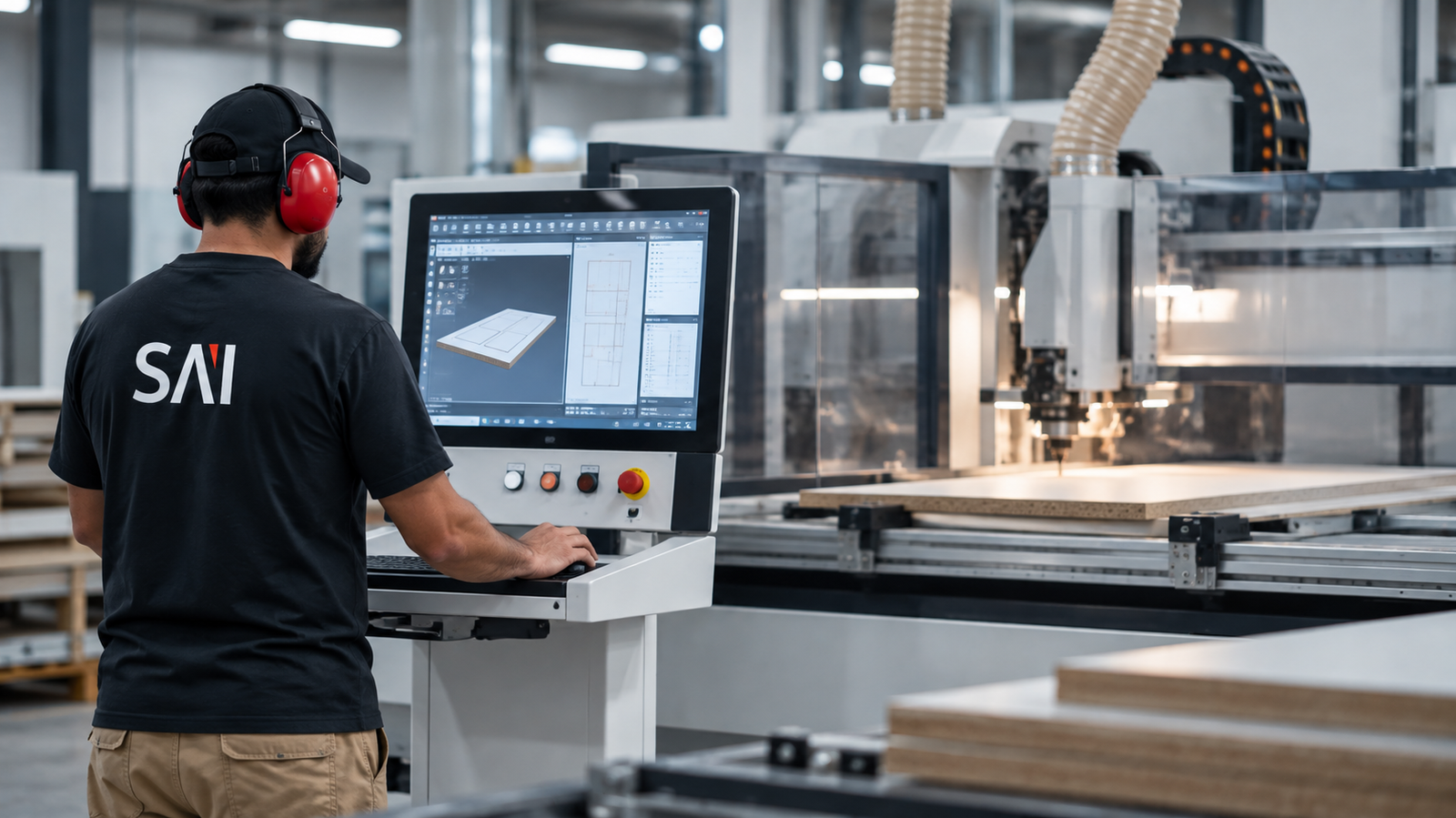
The reality is that a wooden kitchen can be a long-term investment if the materials and design are carefully selected. The issue is not the wood itself, but the type, quality of manufacturing, and maintenance.
Common Problems in Wooden Kitchens
- Panel swelling: Caused by moisture accumulation, especially near the sink or washing area.
- Surface peeling: Low-quality treated wood may lose its coating or shine over time.
- Color fading or discoloration: Prolonged exposure to heat or sunlight can change the wood’s color.
- Weak hinges and drawers: Natural wood expansion and contraction can damage weak fittings.
Practical Solutions
- Choose high-quality, moisture- and heat-resistant wood such as high-density MDF or treated solid wood, which withstands heavy use and maintains appearance.
- Use high-quality protective layers like laminate, PVC, or tempered glass to prevent surface damage.
- Design effective ventilation in the kitchen to reduce moisture and prolong wood life.
- Work with specialized companies experienced in wooden kitchen design to ensure quality fittings and finishes.
Additional Tips
- Avoid placing hot pots directly on wood surfaces.
- Clean spills immediately with a dry or slightly damp cloth.
- Avoid harsh cleaners that can damage the surface finish.
- Maintain hinges and drawers periodically for smooth operation.
Benefits
- A durable kitchen that stays beautiful for years.
- Functional and organized cooking space while maintaining elegance.
- Protects your investment from damage due to improper use or low-quality materials.